There is perhaps no image in the history of theatre more instantly recognizable, more viscerally powerful, than the mask. From the white half-mask of the Phantom to the black domino of the Venetian carnival, from the leather visage of Zorro to the porcelain faces of Noh theatre, the mask has been a constant presence on the stage for more than two thousand years. It is at once the simplest and the most complex of theatrical symbols — a piece of material that conceals the face, and in doing so, reveals the soul.
But what, exactly, does the mask mean? Is it a symbol of deception? Of protection? Of transformation? Of liberation? The answer, of course, is all of these things — and more. The mask is a paradox: it hides and reveals, it protects and imprisons, it liberates and constrains. And nowhere is this paradox more fully explored than in the world of gothic musical theatre, where the mask is not merely a prop but a character, a theme, and a philosophy.
In this essay, we will explore the symbolism of the mask across the history of theatre — from its ancient origins to its modern manifestations — with a particular focus on its role in gothic musical theatre, and in The Phantom of the Opera in particular. We will ask: what does it mean to wear a mask? What does it mean to remove one? And what does it mean to see someone else wearing one?
The Ancient Origins: Masks in Greek Theatre
The story of the theatrical mask begins in ancient Greece, in the 5th century BC, in the outdoor amphitheatres of Athens. The earliest Greek plays were performed by actors wearing large, exaggerated masks — masks that served a practical purpose (allowing the audience to see the actor's expression from a distance) and a symbolic one (allowing the actor to become someone else entirely).
In Greek theatre, the mask was not a concealment of identity. It was a transformation of identity. When an actor put on the mask of Oedipus, he did not merely play Oedipus. He became Oedipus. The mask was a vessel for the divine — a channel through which the god Dionysus could speak, through which the myth could be made present, through which the audience could witness not a representation of the story, but the story itself.

This understanding of the mask — as a tool of transformation rather than concealment — would echo through the centuries, shaping every theatrical tradition that followed. But it would also be complicated, challenged, and ultimately transformed by the traditions that came after.
The Commedia dell'Arte: Masks as Character
In 16th-century Italy, a new theatrical tradition emerged: the commedia dell'arte. This was a form of improvised comedy, performed by traveling troupes of actors who wore distinctive masks to represent stock characters — the cunning servant Arlecchino, the foolish old man Pantalone, the boastful soldier Il Capitano, the young lovers Isabella and Flavio.
In the commedia, the mask was not a transformation into the divine. It was a fixing of character. The mask told the audience, immediately and unmistakably, who this character was — what their role was, what their flaws were, what their desires were. The mask was a shorthand, a visual language that allowed the audience to understand the character without a word being spoken.
But the commedia mask was also a liberation. Because the actor's face was hidden, the actor was free to behave in ways that would be unacceptable in ordinary life — to be vulgar, to be violent, to be sexual, to be absurd. The mask was a license to transgress, to break the rules, to explore the darker corners of human behavior without consequence.
The mask is a paradox: it hides and reveals, it protects and imprisons, it liberates and constrains. And nowhere is this paradox more fully explored than in gothic musical theatre.— From the essay
This understanding of the mask — as a tool of liberation and transgression — would prove crucial to the development of gothic theatre. For the gothic is, at its heart, a genre of transgression — a genre that explores the dark, the forbidden, the unacceptable. And the mask is the perfect symbol for that exploration.
The Mask in Gothic Literature
Before the mask appeared on the gothic stage, it appeared in gothic literature. The 18th and 19th centuries saw a flourishing of gothic fiction — novels like Ann Radcliffe's The Mysteries of Udolpho (1794), Matthew Lewis's The Monk (1796), and Mary Shelley's Frankenstein (1818) — in which the mask played a central role.
In these novels, the mask was typically a symbol of deception — a tool used by villains to conceal their true identities, to manipulate their victims, to commit their crimes. The masked figure was a figure of mystery and menace — a figure who could not be trusted, who could not be known, who could not be seen.
But the mask was also a symbol of the self. In Edgar Allan Poe's "The Masque of the Red Death" (1842), the mask is not merely a concealment. It is a revelation — a revelation of the truth that we are all, in some sense, masked, that we all hide our true selves from the world, that we all dance in the masque of life until the Red Death comes to unmask us all.
Mask Traditions Across Cultures
Transformation
The mask as a vessel for the divine — a channel through which myth becomes present.
Character & Liberation
The mask as a fixing of character and a license to transgress social boundaries.
Anonymity & Desire
The mask as a tool for social equality and the exploration of forbidden desires.
Spirituality
The mask as a channel for ancestral spirits and eternal truths.
Deception & Self
The mask as both concealment of villainy and revelation of the hidden self.
The Phantom's Mask: The Ultimate Symbol
And then came the Phantom. In Gaston Leroux's 1910 novel, the mask was a practical necessity — the Phantom's face was so disfigured that he could not appear in public without it. But in Andrew Lloyd Webber's 1986 musical, the mask became something far more complex. It became a symbol — a symbol of concealment, of identity, of transformation, of liberation, of imprisonment, of love, of fear, of the self.
The Phantom's mask is white — the color of purity, of innocence, of the blank page. But it covers a face that is anything but pure — a face that is disfigured, that is monstrous, that is the physical manifestation of the Phantom's inner pain. The mask, then, is a lie — a lie that tells the truth, a lie that conceals the reality while revealing the essence.
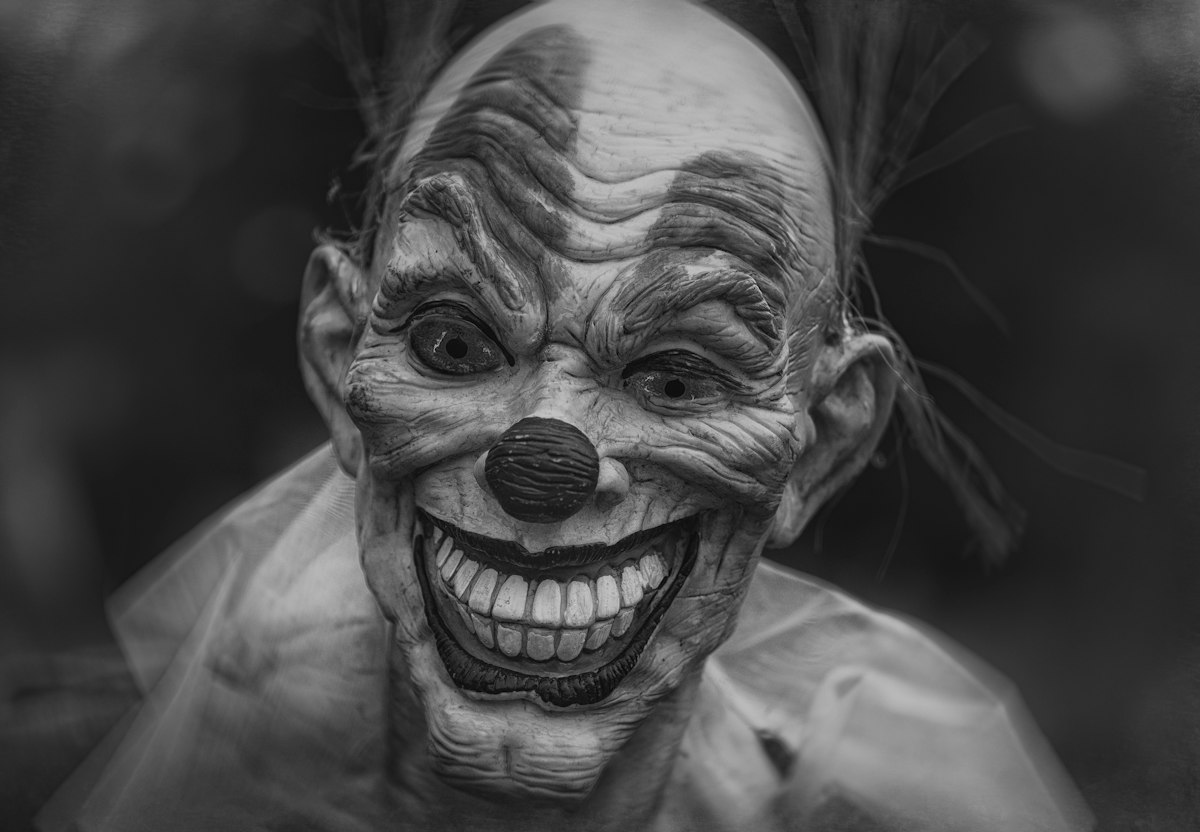
But the mask is also a truth. It is the truth that we all wear masks — that we all hide our true selves from the world, that we all present a face to the world that is not quite our own. The Phantom's mask is simply more visible, more literal, more honest than the masks that the rest of us wear.
The Many Meanings of the Phantom's Mask
- Concealment: The mask hides the Phantom's disfigurement from the world.
- Protection: The mask protects the Phantom from the rejection and cruelty of others.
- Transformation: Behind the mask, the Phantom is not a monster. He is a genius, a composer, a lover.
- Imprisonment: The mask also imprisons the Phantom — it is a constant reminder of his difference, his isolation, his pain.
- Power: The mask gives the Phantom power — the power to appear and disappear, to terrify and seduce, to control the narrative.
- Vulnerability: The mask also reveals the Phantom's vulnerability — his need to hide, his fear of being seen, his longing to be loved.
- Identity: The mask raises the question: who is the Phantom without it? Is he the face beneath, or the mask above?
The Moment of Unmasking
Perhaps the most powerful moment in the entire musical is the moment when the Phantom's mask is removed — not by the Phantom himself, but by Christine. This moment occurs twice in the show: once in the lair, when Christine tears the mask from the Phantom's face in a moment of anger and curiosity; and once in the final scene, when the Phantom removes it himself, in a moment of vulnerability and surrender.
Both moments are devastating. But they are devastating for different reasons. The first unmasking is an act of violation — Christine violates the Phantom's privacy, his dignity, his right to conceal himself. The second unmasking is an act of revelation — the Phantom reveals himself voluntarily, in a moment of trust and surrender.
The first unmasking is an act of violation. The second is an act of revelation. Both are devastating. Both are necessary. Both are true.— From the analysis
And what do we see when the mask is removed? We see a face that is disfigured, yes. But we also see a face that is human — a face that is capable of pain, of love, of longing, of tears. The mask, it turns out, was not hiding a monster. It was hiding a man. And in that revelation, we are forced to confront our own assumptions about beauty and ugliness, about normality and difference, about the self and the other.
The Psychology of the Mask
The mask has long been a subject of interest to psychologists. In the early 20th century, the psychoanalyst Donald Winnicott wrote about the "false self" — the self that we present to the world, the self that is shaped by social expectations, by parental demands, by cultural norms. The false self, Winnicott argued, is a kind of mask — a mask that protects the "true self" from the world, but that also imprisons the true self, that prevents it from being seen, from being known, from being loved.
The Phantom's mask is a literalization of Winnicott's concept. The Phantom's "false self" is the monster — the figure of terror and menace that he presents to the world. His "true self" is the man beneath the mask — the genius, the composer, the lover, the vulnerable, wounded human being who longs to be seen and loved.
But the relationship between the mask and the self is more complex than this. The mask is not merely a concealment of the true self. It is also a creation of a new self — a self that is different from the true self, but that is also, in some sense, more real than the true self. The Phantom behind the mask is not the same as the Phantom without it. The mask transforms him — it gives him power, it gives him presence, it gives him a kind of terrible beauty that he would not otherwise possess.
The Mask in Other Gothic Works
- The Picture of Dorian Gray (1890) — The portrait serves as a kind of mask, concealing Dorian's corruption from the world.
- Dr. Jekyll and Mr. Hyde (1886) — The transformation potion is a chemical mask, allowing Jekyll to become Hyde.
- The Man in the Iron Mask (1850) — The iron mask is a literal imprisonment, concealing identity and power.
- Beauty and the Beast (1740) — The Beast's appearance is a mask that conceals his true, princely nature.
- Zorro (1919) — The black mask is a symbol of justice, concealing identity while revealing purpose.
The Mask in Contemporary Culture
The symbolism of the mask has not remained confined to the theatre. In the 20th and 21st centuries, the mask has become a central symbol in many areas of contemporary culture — from the superhero comics of Marvel and DC (where the mask is a symbol of identity, power, and responsibility) to the anonymous activism of groups like Anonymous (where the Guy Fawkes mask is a symbol of resistance and collective identity) to the social media profiles that we all wear (where the mask is a digital one, a curated presentation of the self that conceals as much as it reveals).
In each of these contexts, the mask serves the same function that it has always served: it allows us to become someone else, to explore parts of ourselves that we cannot explore in ordinary life, to transgress boundaries that we cannot transgress without it. The mask is a tool of liberation — but it is also a tool of concealment, of deception, of imprisonment. It is, as it has always been, a paradox.
The Final Question: Who Is Behind the Mask?
And so we return to the central question: who is behind the mask? Is it the true self, hidden from the world? Is it a new self, created by the mask? Is it both? Is it neither?
The answer, I would argue, is that the question itself is wrong. The mask does not conceal a self. It creates a self — a self that is different from the self that exists without the mask, but that is also, in some sense, more real than that self. The mask is not a lie. It is a truth — a truth that can only be spoken through concealment, a truth that can only be revealed through disguise.
The mask does not conceal a self. It creates a self — a self that is different from the self that exists without the mask, but that is also, in some sense, more real than that self.— From the analysis
And this, perhaps, is the deepest lesson of the gothic mask. It teaches us that we are not merely the selves that we present to the world. We are also the selves that we hide, the selves that we create, the selves that we become when we put on the mask. We are, in short, multiple — and the mask is the tool that allows us to explore that multiplicity, to become not one self but many, to live not one life but many.
The Legacy: Masks That Endure
As we look to the future of theatre, the mask will undoubtedly continue to evolve. New technologies will bring new possibilities — digital masks, virtual masks, masks that can change in real time, masks that can respond to the audience, masks that can think. And new artists will bring new visions — masks that challenge our assumptions, that transgress our boundaries, that reveal our truths.
But the core of the mask's power — its ability to conceal and reveal, to transform and liberate, to imprison and free — will remain. Because that power does not come from the technology. It comes from the human need — the need to be someone else, to explore the unknown, to transgress the boundaries, to become more than we are.
The Phantom's mask is, in this sense, not merely a symbol of one character, one story, one show. It is a symbol of us — of our own masks, our own concealments, our own transformations. It is a reminder that we are all, in some sense, masked — and that the mask is not a curse, but a gift. A gift that allows us to become more than we are, to explore more than we know, to be more than we seem.
In sleep, he sang to me. And in that song, I heard not a monster, but a mirror. And in the mirror, I saw not a face, but a mask. And in the mask, I saw myself.