
There is a moment in The Phantom of the Opera that has divided audiences, critics, and scholars for nearly four decades. It lasts only a few seconds. It contains no words. And yet it is, arguably, the most important moment in the entire musical. The moment when Christine Daaé — the young soprano who has spent the entire show torn between two men, two worlds, two versions of herself — leans forward and kisses the Phantom. Not Raoul. Not her childhood sweetheart. Not the safe, noble, socially acceptable choice. The Phantom. The monster. The man behind the mask.
Why does she do it? Is it pity? Is it love? Is it recognition? Is it rebellion? For forty years, audiences have debated this question. Critics have written essays about it. Scholars have built careers on it. And still, the moment refuses to yield a single, definitive answer. Perhaps that is its genius. Perhaps that is why it endures.
In this analysis, we will examine Christine's choice from multiple perspectives — psychological, feminist, musical, and dramaturgical — to understand not just what she does, but what it means. And in doing so, we may discover something unexpected: that Christine's choice is not merely the climax of the Phantom's story. It is the climax of her own.
The Scene: What Actually Happens
Before we can analyze the choice, we must understand the context. The final scene takes place in the Phantom's underground lair, immediately after the "Point of No Return" sequence. Raoul has been trapped in the Punjab lasso. The Phantom is preparing to kill him. Christine stands between them — the man she loves, and the man who loves her. And then, in a moment that defies all expectation, she kisses the Phantom.
The kiss is not romantic. It is not passionate. It is not even particularly tender. It is, rather, an act of recognition — a moment of profound, almost unbearable understanding. Christine sees the Phantom not as a monster, not as a savior, not as a lover, but as a human being. And in seeing him, she sees herself.

The Phantom's reaction is equally complex. He does not respond to the kiss with passion or triumph. He responds with release. He lets Raoul go. He lets Christine go. And then, alone in his lair, he covers himself with his cape and disappears — not in rage, not in defeat, but in something closer to grace.
What has just happened? And why does it move us so deeply?
Three Interpretations: Pity, Love, or Recognition?
For decades, critics and audiences have offered three main interpretations of Christine's kiss. Each has its merits. Each has its limitations. And each reveals something different about the story, the characters, and ourselves.
The Three Interpretations
The Traditional Reading
Christine kisses the Phantom out of pity — a compassionate response to his suffering. This reading sees the kiss as an act of charity, not love. It is the interpretation most commonly offered by audiences who view the Phantom as a tragic figure deserving of sympathy.
The Romantic Reading
Christine kisses the Phantom because she loves him — not as a friend, not as a mentor, but as a lover. This reading sees the kiss as the culmination of a love story that has been building since the first note of "Music of the Night." It is the interpretation most commonly offered by fans of the Phantom himself.
The Psychological Reading
Christine kisses the Phantom because she recognizes him — not as a monster or a lover, but as a mirror. In his face, she sees her own fear, her own longing, her own capacity for darkness. The kiss is not pity or love. It is understanding.
Each of these interpretations has been defended passionately by different audiences over the years. But I would argue that the third — the reading of recognition — is the most compelling, the most complex, and the most true to the text. And it is the reading that the music itself supports.
The Feminist Reading: Christine as Agent, Not Object
For many years, Christine was read as a passive figure — a young woman swept along by the passions of the men around her. The Phantom desires her. Raoul desires her. And she, poor thing, is merely the object of their desire. But this reading, I would argue, is fundamentally wrong. And the final scene is the moment when Christine's true agency is revealed.
Think about what happens in that moment. The Phantom has the power. He has Raoul trapped. He has Christine cornered. He has every advantage. And yet, it is Christine who acts. It is Christine who makes the choice. It is Christine who changes the course of the story with a single gesture.
Christine's kiss is not an act of submission. It is an act of power — the power to see, to understand, to choose. In that moment, she is not the object of the story. She is its author.— From the analysis
The kiss is not a romantic gesture. It is a political one. It is Christine's refusal to be defined by the men around her — her refusal to be either the Phantom's victim or Raoul's prize. In kissing the Phantom, she claims her own agency. She chooses her own path. She becomes, in that moment, the author of her own story.
And what does she choose? She chooses neither the Phantom nor Raoul. She chooses herself. She chooses to leave the lair, to return to the world above, to live her own life on her own terms. The kiss is not the end of her story. It is the beginning.
The Psychological Reading: The Mirror and the Mask
But there is another dimension to Christine's choice — a psychological one that goes deeper than either pity or love. To understand it, we must return to the central symbol of the musical: the mask.
The Phantom wears a mask to hide his face. But the mask does more than hide. It transforms. Behind the mask, the Phantom is not a man. He is a myth, a monster, a legend. And Christine, too, wears a mask — the mask of the innocent ingénue, the dutiful student, the proper young lady. Behind that mask, she is something else entirely: a woman of passion, of power, of darkness.
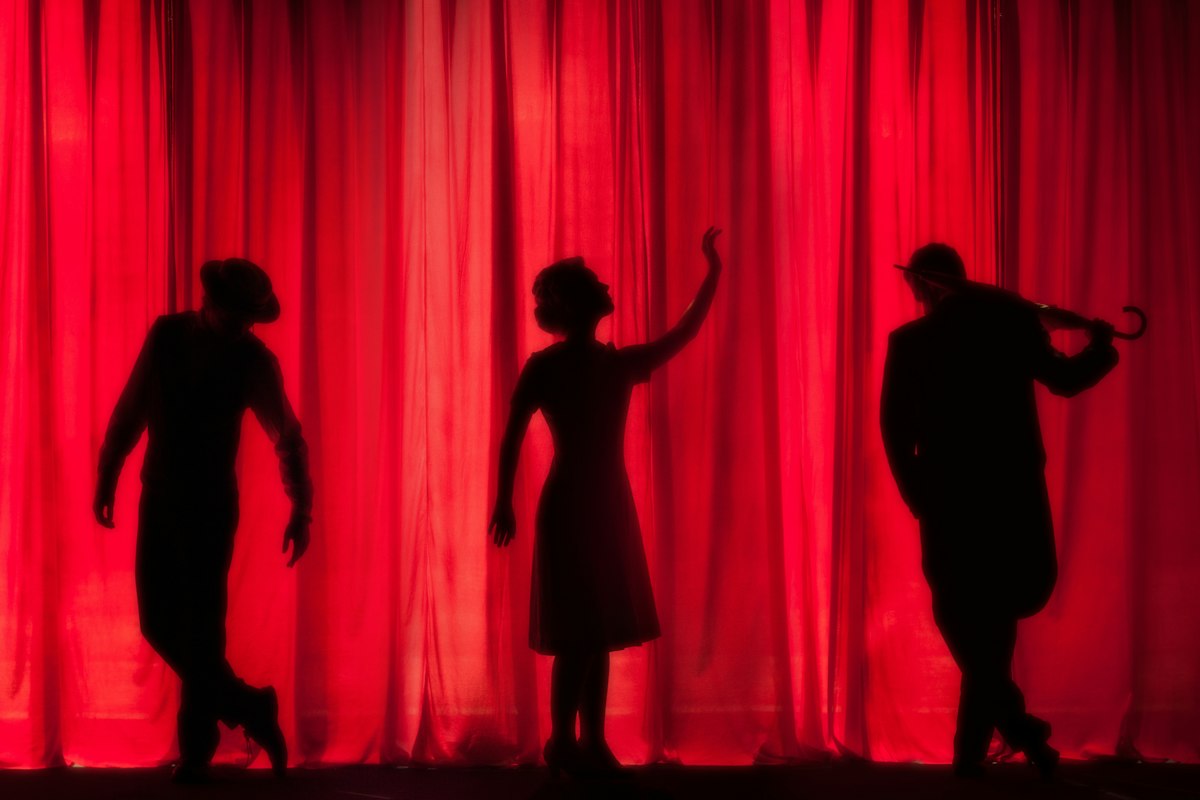
When Christine kisses the Phantom, she is not kissing a monster. She is kissing a mirror. She is seeing in his face her own face — her own fear, her own longing, her own capacity for darkness. And in that moment of recognition, something extraordinary happens. The mask falls. Not the Phantom's mask. Hers.
This is why the kiss is so devastating. It is not a romantic gesture. It is a moment of truth — the truth that we are all, in some way, the Phantom. We all wear masks. We all hide our darkness. We all long to be seen, to be understood, to be loved despite our flaws. And in seeing the Phantom clearly, Christine sees herself.
The Musical Reading: What the Score Tells Us
But perhaps the most compelling evidence for the "recognition" reading comes from the music itself. Lloyd Webber is a master of musical storytelling, and every note of the final scene has been carefully crafted to support a specific emotional reading. Let us listen closely.
The scene begins with the Phantom's demand — "Sing for me!" — sung in a key of desperate, almost hysterical intensity. The music is dark, dissonant, full of unresolved tension. And then Christine sings. Her melody is simple, pure, almost childlike. It is the melody of "Angel of Music" — the song her father taught her, the song that represents her deepest, most innocent self.
Key Musical Moments in the Final Scene
- "Sing for me!" — The Phantom's demand, in a key of desperate intensity. The music is dark, dissonant, full of unresolved tension.
- Christine's response — She sings the melody of "Angel of Music" — simple, pure, almost childlike. The melody of her deepest, most innocent self.
- The kiss — Accompanied by a single, sustained chord that hangs in the air like a question. No resolution. No cadence. Only silence.
- The Phantom's release — The music shifts to a minor key, but with a warmth that was not there before. The tension resolves, not in triumph, but in acceptance.
- The final chord — A single organ note, sustained, fading, disappearing into silence. The Phantom is gone. The music is over. But the echo remains.
And then comes the kiss. And here, Lloyd Webber does something extraordinary. He gives us no music. Or rather, he gives us a single, sustained chord that hangs in the air like a question. There is no resolution. There is no cadence. There is only silence — and in that silence, everything.
This is not the music of romance. It is not the music of pity. It is the music of recognition — the music of a moment so profound that words fail, that melody fails, that only silence can contain it. And in that silence, we understand: Christine has seen the Phantom. And in seeing him, she has seen herself.
The Legacy: Why the Moment Endures
Forty years after the premiere, Christine's kiss remains one of the most debated moments in musical theatre. And perhaps that is its greatest strength. A moment that can be read in multiple ways is a moment that remains alive — a moment that continues to speak to each new generation of audiences in their own language, in their own terms, in their own way.
For some, the kiss is a story of love — the love that transcends appearance, that sees beyond the mask, that finds beauty in the broken. For others, it is a story of pity — the compassion that reaches out to the suffering, that offers comfort to the lonely, that refuses to look away from pain. And for still others, it is a story of recognition — the moment when we see ourselves in the other, when we understand that the monster and the hero are the same creature, when we accept our own darkness as part of our own light.
Christine's kiss is not the end of the story. It is the beginning — the beginning of a new understanding, a new compassion, a new way of seeing ourselves and each other.— From the analysis
Perhaps the truth is that the kiss is all of these things at once. Perhaps that is why it moves us so deeply. It is not a simple gesture. It is a complex one — a gesture that contains multitudes, that speaks in many voices, that means different things to different people at different times.
And perhaps that is the greatest gift of the musical theatre — its ability to create moments that are both specific and universal, both personal and collective, both simple and complex. Christine's kiss is such a moment. It is a moment that belongs to the Phantom, to Christine, to Raoul, to the story. But it is also a moment that belongs to us — to every audience member who has ever sat in the dark and let themselves be moved by a story, by a song, by a single, silent gesture that says more than words ever could.
The Choice That Defines Us
In the end, Christine's choice is not merely a choice between two men. It is a choice between two versions of herself — the innocent girl who sings for her father's ghost, and the woman who has learned to see the world clearly, to accept its darkness, to embrace its complexity. And in choosing the latter, she becomes not merely a character in a story, but a model for how we might all live.
She teaches us that love is not merely passion. It is understanding. That compassion is not merely pity. It is recognition. That courage is not merely bravery. It is the willingness to see clearly, to choose freely, to act authentically — even when the choice is difficult, even when the path is unclear, even when the mask must fall.
Christine's choice is, in the end, a choice that defines not just her character, but our own. It asks us: what do we see when we look at the monster? What do we feel when we look at the mask? What do we choose when we stand between the light and the dark?
The answer, of course, is different for each of us. But the question remains. And as long as it remains, the Phantom will continue to sing. And Christine will continue to choose. And we — the audience, the witnesses, the participants — will continue to sit in the dark and let ourselves be moved.
In sleep, he sang to her. And in that song, she found not a lover, not a savior, but a mirror. And in the mirror, she found herself.