
When the chandelier rises in The Phantom of the Opera, it is not only a visual spectacle. It is an acoustic event. The crash of crystal, the rush of air, the sudden silence that follows — all of it is shaped by the architecture of the theatre itself. The walls, the ceiling, the curve of the balcony, the depth of the stage — each of these elements conspires to create the sound that reaches our ears, and through our ears, our hearts. We think of theatre as a visual art. But it is, at its core, an acoustic one.
And nowhere is this more true than in the world of gothic musical theatre, where sound is not merely accompaniment but atmosphere — where the echo of a footstep in a cavern, the whisper of a voice in the dark, the thunder of an organ in a cathedral of stone, are as essential to the storytelling as the words themselves. To understand gothic theatre, we must understand the spaces in which it is performed. We must understand the architecture of sound.
The Ancient Origins: Sound and the Sacred Space
The story of theatre acoustics begins not in the opera houses of Europe, but in the amphitheatres of ancient Greece. The Theatre of Epidaurus, built in the 4th century BC, is still celebrated today for its extraordinary acoustics — a whisper on the stage can be heard clearly in the highest row of seats, 60 meters away. How did the ancient Greeks achieve this? Through a combination of geometric precision and material science that we are only beginning to fully understand.
The secret lies in the limestone seats, which act as acoustic filters — absorbing low-frequency background noise (the murmur of the crowd, the rustle of clothing) while reflecting high-frequency sounds (the human voice) back toward the audience. The result is a space that amplifies the voice while suppressing distraction — a perfect environment for the delivery of tragedy, comedy, and myth.

But the Greeks understood something deeper than mere acoustics. They understood that space shapes emotion. The amphitheatre was not just a place to hear. It was a place to feel — to feel the collective breath of thousands of listeners, to feel the weight of the story being told, to feel oneself part of something larger than oneself. This understanding — that architecture and emotion are inseparable — would echo through the centuries, shaping every great theatre that followed.
The Birth of the Opera House: Sound as Spectacle
The modern opera house was born in 17th-century Italy, in the courts of Venice, Florence, and Rome. These early theatres were designed not for acoustic perfection, but for social display — the boxes were arranged not to optimize sound, but to optimize visibility, so that the aristocracy could see and be seen. The result was often poor acoustics: sound bounced unpredictably off the ornate plasterwork, the gilded decorations, the velvet draperies.
But as opera grew in popularity, and as composers began to write works of increasing complexity and emotional depth, the demand for better acoustics grew. The 18th and 19th centuries saw a revolution in theatre design, as architects began to treat sound not as an afterthought, but as a primary design consideration.
The opera house is not merely a building. It is an instrument — a vast, complex instrument that shapes the sound of the human voice into something transcendent.— From the essay
The key innovation was the shoebox design — a rectangular hall with high ceilings, parallel walls, and a shallow stage. This design, perfected in halls like the Musikverein in Vienna (1870) and the Concertgebouw in Amsterdam (1888), created a rich, warm sound with long reverberation times — perfect for the lush harmonies of Romantic opera. The shoebox design would go on to influence the architecture of opera houses around the world, including the two most important venues in the history of gothic musical theatre: the Palais Garnier in Paris, and Her Majesty's Theatre in London.
The Palais Garnier: A Cathedral of Sound
When Charles Garnier designed the Paris Opera House in 1861, he was not merely designing a building. He was designing an experience — a total work of art that would engage every sense. The acoustics of the Palais Garnier are among the most celebrated in the world, and for good reason. The hall was designed with meticulous attention to the behavior of sound, from the curve of the ceiling to the materials of the walls.
The Grand Foyer, with its marble floors and gilded ceilings, is not merely decorative. It is an acoustic prelude — a space that prepares the ear for the sound to come. The marble reflects sound sharply, creating a bright, lively atmosphere. The gilded plasterwork diffuses sound, preventing harsh echoes. And the velvet draperies absorb excess high frequencies, creating a warm, intimate sound.

But the true masterpiece is the auditorium itself. The horseshoe shape — a design inherited from the Italian opera houses of the 17th century — creates a unique acoustic environment. Sound reflects off the curved walls and ceiling, creating a rich, enveloping sound field. The multiple tiers of boxes act as acoustic diffusers, breaking up sound waves and preventing harsh echoes. And the velvet upholstery of the seats absorbs excess high frequencies, creating a warm, intimate sound that is perfect for the human voice.
The result is a hall that is both grand and intimate — a space that can accommodate the thunder of a full orchestra and the whisper of a solo voice with equal clarity. It is no accident that the Palais Garnier has become the setting for one of the most famous stories in gothic theatre — Gaston Leroux's Le Fantôme de l'Opéra. The building itself is a character in the story — a living, breathing entity that shapes the sound, and through the sound, the emotion.
Her Majesty's Theatre: The Home of the Phantom
If the Palais Garnier is the setting of the Phantom's story, Her Majesty's Theatre in London is the setting of its musical life. Since 1986, this grand West End theatre has been the home of Andrew Lloyd Webber's The Phantom of the Opera — the longest-running show in the theatre's history, and one of the most successful musicals of all time.
But Her Majesty's Theatre is not merely a venue. It is an instrument — a carefully tuned acoustic environment that shapes the sound of the Phantom's music in ways that no other theatre can. The hall was designed in 1897 by the architect C.J. Phipps, and its acoustics have been carefully preserved and refined over the decades.
The Acoustic Principles of Gothic Theatre
- Reverberation Time: The time it takes for sound to decay by 60 decibels. Gothic musicals require longer reverberation times (1.5–2.0 seconds) to create a sense of space and atmosphere.
- Early Reflections: Sound waves that reach the listener within 50 milliseconds of the direct sound. These create a sense of intimacy and clarity.
- Late Reflections: Sound waves that arrive after 50 milliseconds. These create a sense of space and envelopment.
- Diffusion: The scattering of sound waves by irregular surfaces. This prevents harsh echoes and creates a smooth, even sound field.
- Absorption: The removal of sound energy by soft materials. This controls excessive reverberation and prevents muddiness.
The key to Her Majesty's acoustic success is its balance — the careful balance between reflection and absorption, between clarity and warmth, between grandeur and intimacy. The plasterwork of the ceiling and walls reflects sound, creating a bright, lively atmosphere. The velvet upholstery of the seats and the heavy draperies of the boxes absorb excess high frequencies, creating a warm, intimate sound. And the curve of the balcony and the proscenium arch diffuse sound, preventing harsh echoes and creating a smooth, even sound field.
The result is a hall that is perfect for the Phantom's music — a music that requires both the thunder of a full orchestra and the intimacy of a solo voice. When the Phantom sings "Music of the Night," the sound wraps around the audience like a velvet cloak — warm, enveloping, and deeply intimate. When the chandelier crashes, the sound fills the hall like a thunderclap — bright, sharp, and terrifying. And when the organ swells in the overture, the sound rises like a wave — rich, complex, and overwhelming.
The Science of Sound: How Architecture Shapes Emotion
But acoustics is not merely a matter of physics. It is also a matter of psychology. The way sound behaves in a space affects not only what we hear, but how we feel. And in the world of gothic musical theatre, this emotional dimension is everything.
Consider the phenomenon of reverberation — the persistence of sound after the source has stopped. In a space with long reverberation time, sound lingers in the air, creating a sense of space and atmosphere. This is why cathedrals sound so different from recording studios — the reverberation creates a sense of the sacred, of the eternal, of the sublime.
In gothic musical theatre, reverberation is used deliberately to create emotional effects. The long reverberation of the Phantom's lair creates a sense of mystery and menace. The short reverberation of the opera house stage creates a sense of clarity and precision. And the varying reverberation of different spaces within the theatre — the foyer, the auditorium, the stage — creates a sense of journey, of moving from one world to another.
Great Theatres and Their Acoustic Signatures
Paris, 1875
Reverberation time: 1.4 seconds. Warm, enveloping sound with rich low frequencies. Perfect for French grand opera and gothic spectacle.
London, 1897
Reverberation time: 1.2 seconds. Bright, clear sound with excellent speech intelligibility. Perfect for the intimate drama of the Phantom.
New York, 1927
Reverberation time: 1.3 seconds. Balanced sound with strong midrange. The Broadway home of the Phantom for 35 years.
Stuttgart, 1978
Reverberation time: 1.6 seconds. Rich, warm sound with long decay. The current home of Dance of the Vampires.
London, 1871
Reverberation time: 2.0+ seconds. Massive, enveloping sound. Famous for its acoustic challenges and triumphs.
Consider also the phenomenon of spatial impression — the sense of being surrounded by sound. In a space with good spatial impression, the listener feels enveloped by the music, as if it is coming from all directions. This creates a sense of immersion, of being inside the music rather than merely observing it from outside.
In gothic musical theatre, spatial impression is used to create a sense of presence — the sense that the Phantom is not merely on the stage, but in the room with us. When the Phantom's voice echoes through the auditorium, it is not merely a sound. It is a presence — a presence that we can feel in our bones, in our breath, in the hairs on the back of our necks. And this presence is created not by the singer alone, but by the architecture of the theatre itself.
The Modern Challenge: Technology vs. Tradition
In the 21st century, theatre acoustics faces a new challenge: the rise of amplification. Modern musicals are often heavily amplified, with microphones on every singer and speakers throughout the auditorium. This allows for greater control over the sound, but it also raises questions about the relationship between architecture and acoustics.
When a musical is amplified, the architecture of the theatre becomes less important. The sound is no longer shaped by the walls and ceiling, but by the mixing console and the speaker placement. This can be a good thing — it allows for greater consistency and control. But it can also be a bad thing — it can create a sense of disconnection between the performer and the audience, between the sound and the space.
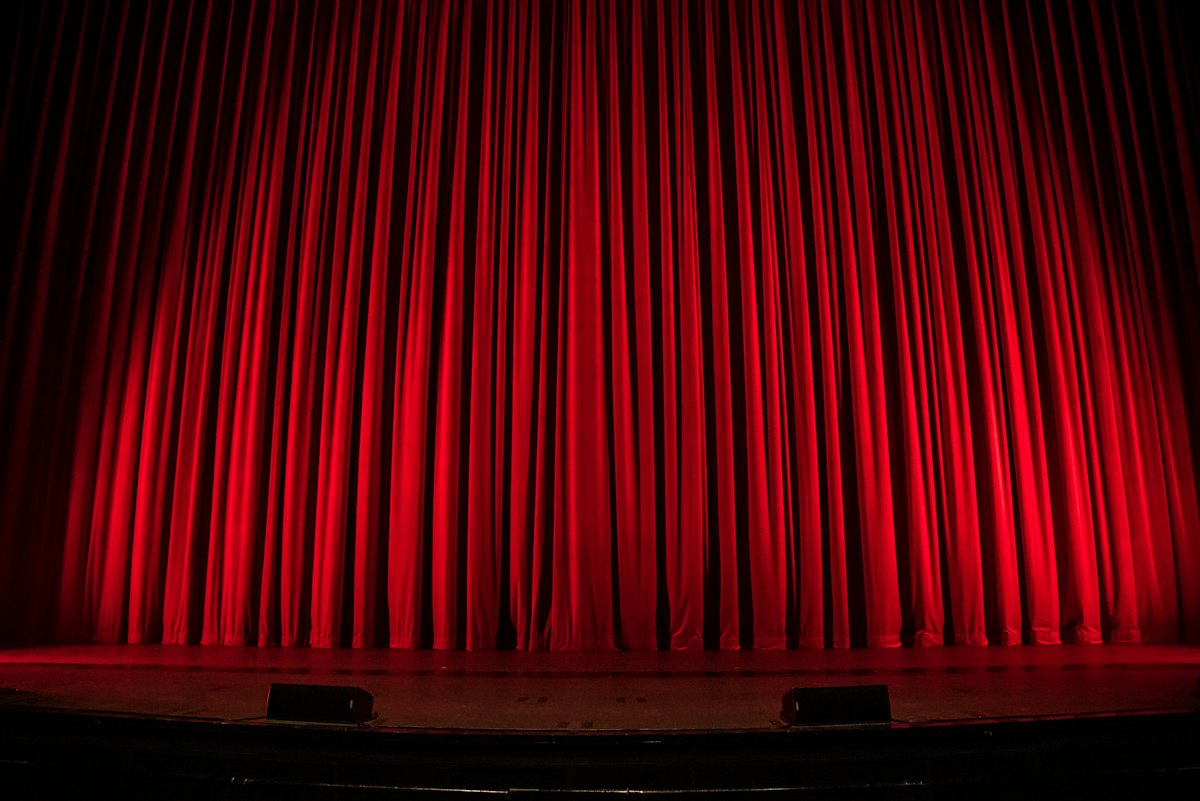
In the world of gothic musical theatre, this tension is particularly acute. The Phantom, for example, is a show that was designed to be performed without amplification — or with minimal amplification. The score was written to take advantage of the natural acoustics of the theatre, and the staging was designed to create a sense of intimacy and presence that amplification can sometimes destroy.
But the reality of modern theatre is that amplification is often necessary — particularly in large halls, where the natural acoustics may not be sufficient to carry the sound to every seat. The challenge, then, is to use amplification in a way that enhances rather than replaces the natural acoustics of the theatre — to use technology to create a sense of presence and intimacy, rather than to destroy it.
The Future of Theatre Acoustics
- Hybrid Design: Combining traditional acoustic design with modern technology to create spaces that are both natural and flexible.
- Variable Acoustics: Using movable panels and adjustable surfaces to change the acoustic properties of a space for different types of performance.
- Digital Modeling: Using computer simulations to predict and optimize acoustic performance before a theatre is built.
- Immersive Sound: Using spatial audio technology to create three-dimensional soundscapes that envelop the audience.
- Sustainable Materials: Using environmentally friendly materials that also provide excellent acoustic properties.
The Emotional Architecture: Why Space Matters
But perhaps the most important lesson of theatre acoustics is not technical, but emotional. The way sound behaves in a space affects not only what we hear, but how we feel. And in the world of gothic musical theatre, this emotional dimension is everything.
When we sit in a great theatre, we are not merely listening to music. We are experiencing it — experiencing it in our bodies, in our breath, in the hairs on the back of our necks. The sound wraps around us like a velvet cloak. It fills the space like a thunderclap. It whispers in our ears like a secret. And through the sound, we experience the story — not as observers, but as participants.
The theatre is not merely a building. It is a living, breathing entity — an instrument that shapes the sound of the human voice into something transcendent, something eternal, something that speaks to the deepest part of our souls.— From the essay
This is why the architecture of the theatre matters. It is not merely a matter of aesthetics or engineering. It is a matter of emotion — of creating a space that can hold the weight of the story, the depth of the music, the intensity of the performance. It is a matter of creating a space that can make us feel — that can make us laugh, cry, tremble, and soar.
And in the world of gothic musical theatre, this emotional dimension is particularly important. The Phantom is not merely a story about a masked man in an opera house. It is a story about longing — about the longing to be seen, to be loved, to be understood. And the architecture of the theatre — the curve of the balcony, the depth of the stage, the height of the ceiling — shapes that longing, gives it form, gives it voice.
The Future: New Spaces for Old Stories
As we look to the future of gothic musical theatre, we must also look to the future of theatre architecture. New theatres are being built around the world, each with its own acoustic signature, its own emotional character. And each of these new spaces offers new possibilities for the stories we tell.
The challenge is to create spaces that are both flexible and characterful — spaces that can accommodate a wide range of performances, but that also have their own distinct personality. Spaces that can be both grand and intimate, both bright and dark, both clear and mysterious.
And as we create these new spaces, we must also remember the old ones — the Palais Garnier, Her Majesty's Theatre, the Majestic Theatre, the Apollo Theater in Stuttgart. These are not merely buildings. They are instruments — instruments that have shaped the sound of some of the greatest music ever written, and that will continue to shape the sound of the music yet to come.
The architecture of sound is not a static thing. It is a living, evolving tradition — a tradition that stretches from the amphitheatres of ancient Greece to the opera houses of 19th-century Europe, from the musical theatres of 20th-century Broadway to the immersive soundscapes of the 21st century. And as long as there are stories to tell, and music to sing, and audiences to listen, the architecture of sound will continue to evolve — shaping the sound, and through the sound, the emotion, and through the emotion, the story.
In the end, the theatre is not merely a building. It is a living, breathing entity — an instrument that shapes the sound of the human voice into something transcendent, something eternal, something that speaks to the deepest part of our souls. And in the world of gothic musical theatre, that instrument plays a song that will echo through the centuries — a song of longing, of love, of darkness, and of light.